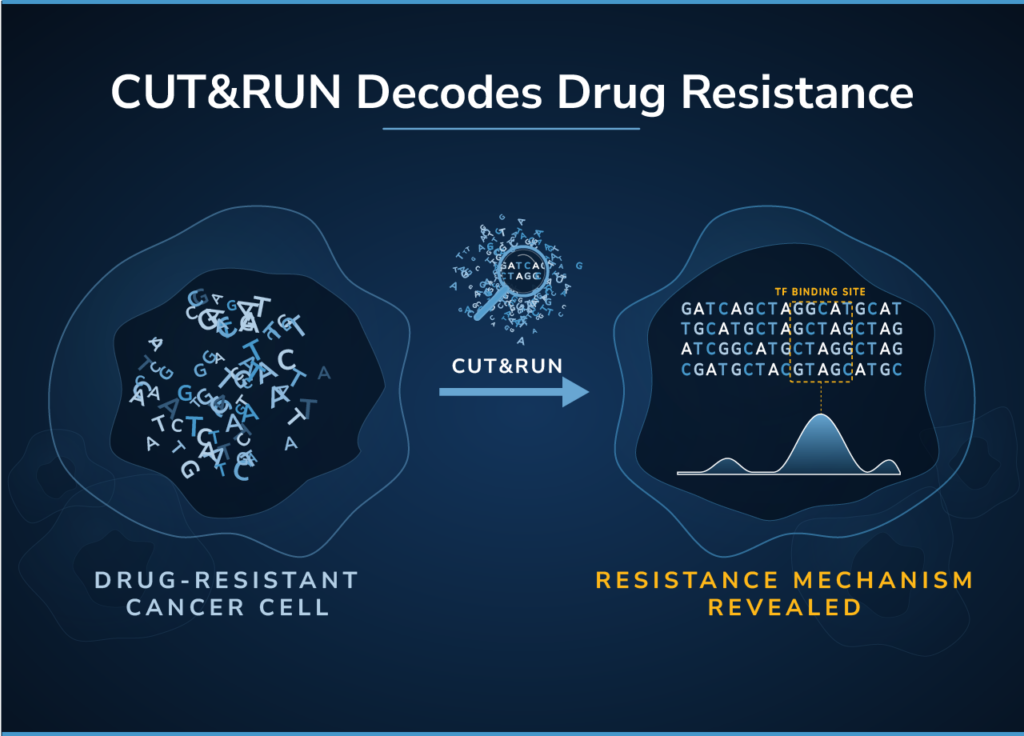
Cancer epigenetics is revealing how changes “above the genome” drive tumor development and progression. In cancer cells, DNA methylation patterns can be distorted, tumor suppressor genes silenced via repressive histone marks, and oncogenes activated by aberrant chromatin states. These epigenetic alterations are central to oncogenesis and are attractive targets for therapy. For cancer researchers, mapping the epigenome of tumors – identifying which genes are epigenetically switched on or off – is critical to understanding disease mechanisms and discovering new biomarkers or drug targets. EpiCypher recognizes both the promise and the practical hurdles of epigenomic profiling in oncology.

Key challenges in chromatin mapping:

  • Limited sample and tumor heterogeneity: Tumor biopsies or rare subpopulations (e.g. circulating tumor cells) yield low cell numbers. Traditional methods often can’t generate data from such small or mixed samples, meaning important epigenetic changes could go undetected.

  • Dynamic range of modifications: Cancer genomes can exhibit global shifts (like widespread DNA hypermethylation) as well as subtle, focal chromatin changes. Detecting both requires assays that are sensitive and quantitative across a broad dynamic range.

  • Translational relevance: Researchers need quantitative assays to compare normal vs. tumor chromatin states and track changes with treatment. Reproducibility and standardization become vital when moving discoveries toward clinical applications.

EpiCypher solutions empowering oncology researchers

Chromatin mapping

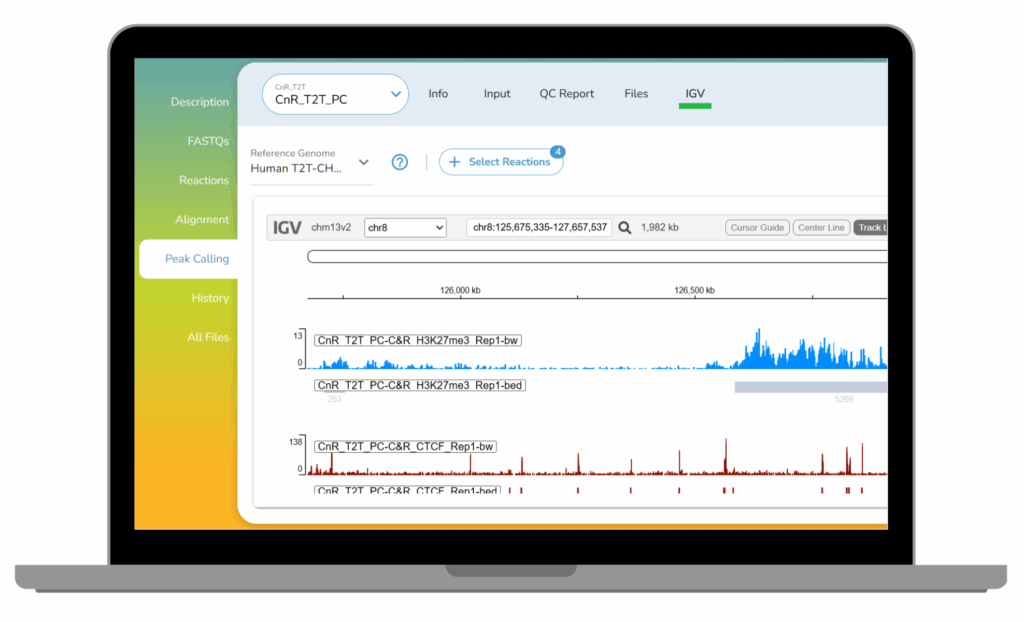
Our CUTANA™ CUT&RUN and CUT&Tag assays are exceptionally well-suited for cancer epigenetics studies. These assays have unmatched sensitivity, enabling chromatin mapping in low-input tumor samples that would fail by ChIP-seq. For example, EpiCypher’s CUT&RUN technology was used to profile chromatin in rare lymphoma cell subsets, uncovering heterochromatin changes that standard ChIP could not detect. By using CUT&RUN, cancer biologists can map activating or repressive histone marks in needle biopsy specimens or xenografts with confidence that the data reflect the in vivo state, not technical noise.

DNA methylation profiling

DNA methylation is a well-known player in cancer (e.g. hypermethylation silencing tumor suppressors). Traditional bisulfite sequencing for methylation is costly and requires deep sequencing. To address this, we launched CUTANA™ meCUT&RUN, a revolutionary assay to map DNA methylation patterns across the genome with high coverage but at a fraction of the sequencing cost. Using a targeted enrichment approach (via an MeCP2-GST fusion that binds methylated CpGs), meCUT&RUN can generate base-pair resolution maps of 5-methylcytosine from as few as 10,000 cells, all without bisulfite conversion. For cancer researchers, this means you can perform whole-genome DNA methylation analysis on limited tumor samples or circulating DNA and still capture ~80% of CpG sites with >20x lower sequencing requirements than whole-genome bisulfite methods. In practical terms, a lab can profile DNA methylation in a patient tumor sample or organoid model quickly and affordably, enabling larger cohort studies or iterative experiments that were previously cost-prohibitive.

How does CUT&RUN work?

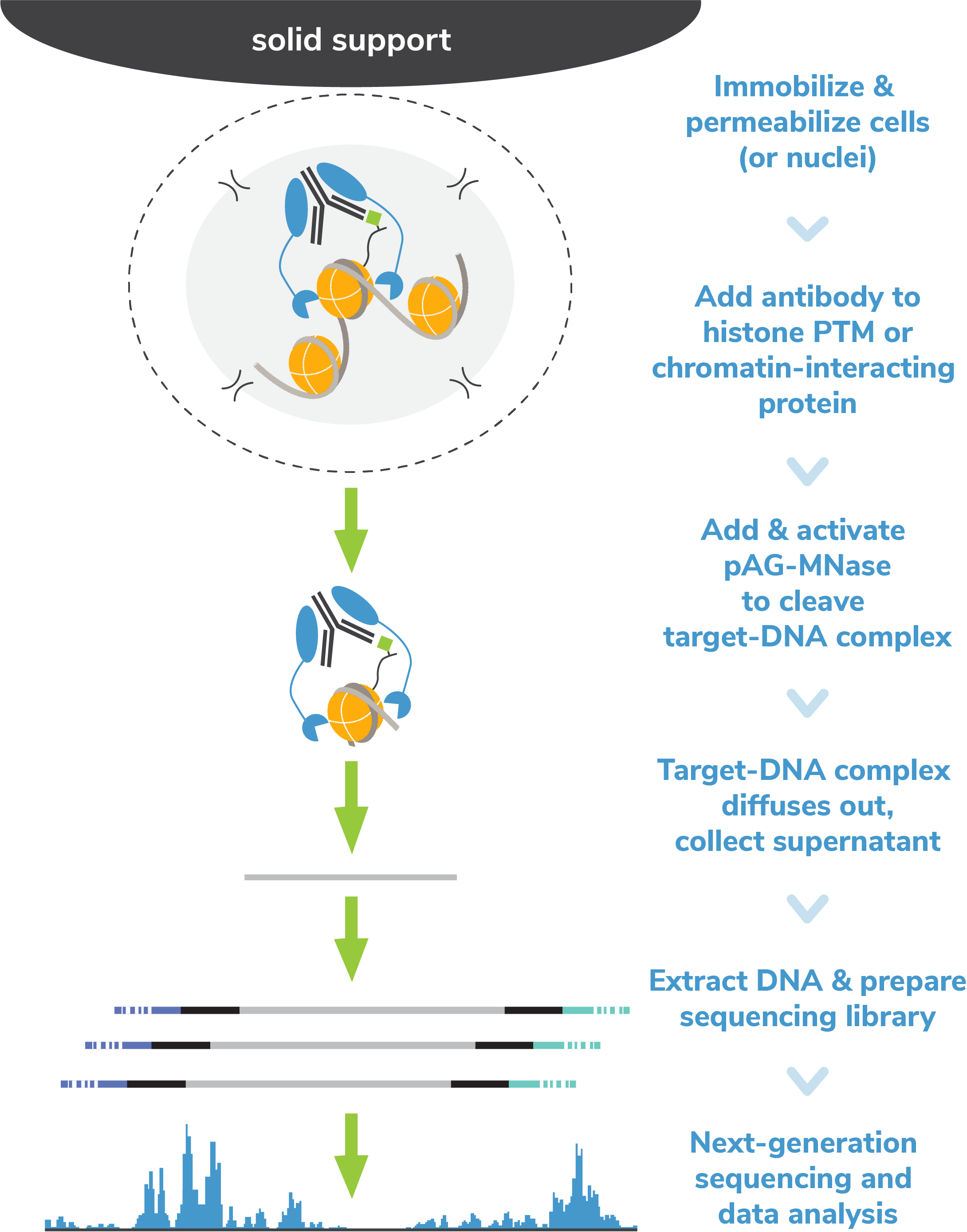
The Cleavage Under Targets and Release Using Nuclease (CUT&RUN) method builds upon Chromatin ImmunoCleavage (ChIC) technology.

In CUT&RUN, a fusion of protein A, protein G and micrococcal nuclease (pAG-MNase) is used to selectively cleave antibody-labelled chromatin. This strategy eliminates immunoprecipitation steps, greatly simplifying the assay workflow. Clipped chromatin fragments are isolated from solution and used for NGS.

The targeted enrichment of CUT&RUN allows for better signal : noise with only 3-5 million sequencing reads, significantly reducing sequencing costs vs ChIP-seq. See a video summary of CUT&RUN advantages here.

Want to get started? Our CUT&RUN and Library Prep Kits provide a comprehensive and streamlined solution.

To learn more about CUT&RUN, check out our Technical Support Center.

Robust for diverse histone PTMs and chromatin-associated proteins
Representative CUT&RUN genome browser tracks show high-quality profiles generated for a variety of targets, including histone PTMs, transcription factors, chromatin reader proteins, writer enzymes, and remodeling enzymes.
View
Compatible with diverse sample inputs and preparations
CUT&RUN data is indistinguishable across different cell and nuclear preparation methods. Heatmaps show H3K4me3 profiles from K562 cells/nuclei aligned to the transcription start site (TSS).
View
Low cell inputs maintain high signal over background
CUT&RUN assays are robust down to 5,000 cells without sacrificing data quality. Heatmaps show BRD4 profiles from K562 cells aligned to the transcription start site (TSS).
View
High signal to noise at reduced sequencing depth
CUTANA™ CUT&RUN generates superior quality profiles vs. ChIP-seq using 10x fewer sequencing reads. Representative H3K4me1 profiles are expressed as reads per million (RPM). Signal-to-noise of each assay was determined by genome-wide analysis and indicated by color (left).
View

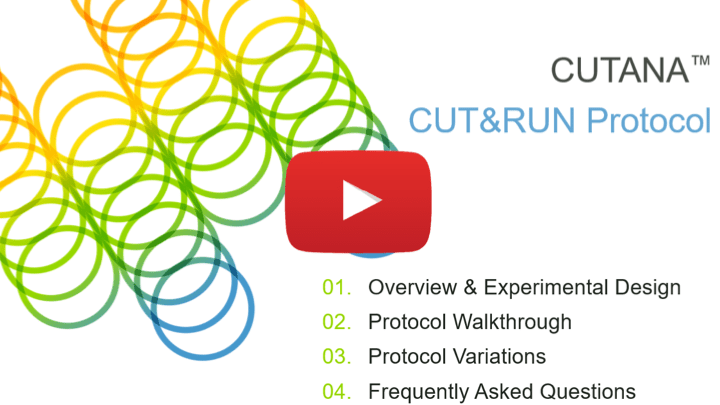
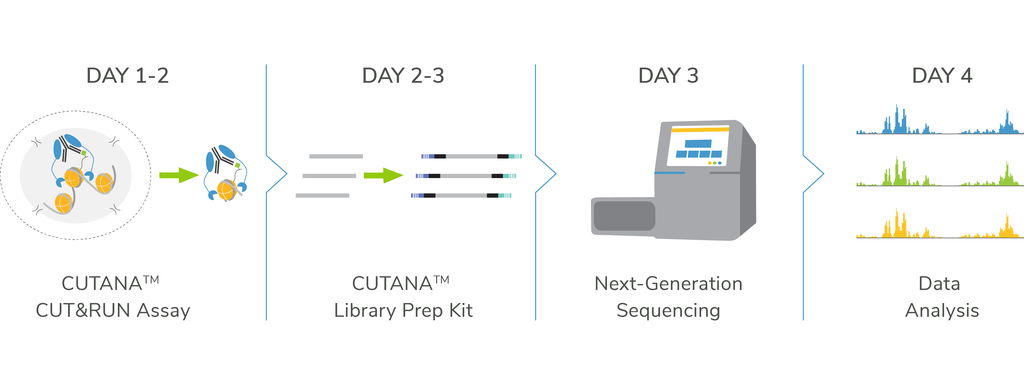
CUTANA™ CUT&RUN: Go from cells to data in < 4 days

Get started with CUTANA™ CUT&RUN assays

Above is a comprehensive walkthrough video put together by our scientific and technical support team to compliment our CUT&RUN protocol.

The CUTANA™ CUT&RUN Protocol

EpiCypher offers a collection of products for CUT&RUN assays, including pAG-MNase, spike-in controls, antibodies, and accessory reagents / tools, making it easy to create your own assay or follow a standard protocol.

We have developed a reliable and user-friendly CUT&RUN protocol, optimized for:

  • Diverse targets, including histone PTMs, transcription factors, and more
  • Low cell inputs (down to 5,000 cells)
  • Reduced sequencing depths (3-5 million sequencing reads)
  • resh, frozen, and cross-linked cells or nuclei

In addition, we have addressed common issues (e.g. bead clumping / loss) and enabled high-throughput sample handling via an 8-strip format. The protocol includes notes throughout, critical steps, pictures for clarity, and a FAQ section.

Explore Our Products

Featured Publications

  • Skene and Henikoff. An efficient targeted nuclease strategy for high-resolution mapping of DNA binding sites. eLife 6, e21856 (2017). (PMID: 28079019)
    In 2017, Steven Henikoff’s lab at the Fred Hutchinson Cancer Research Center published their first paper describing CUT&RUN. This in situ chromatin mapping assay builds on ChIC technology from Ulrich Laemmli’s group, using a protein A-fused micrococcal nuclease (pA-MNase) to selectively cleave antibody-bound chromatin loci in intact cells and nuclei. Skene et al. describes the assay and uses it to profile several transcription factors in yeast and human nuclei. Head-to-head comparisons with ChIP-seq assays further highlights the enhanced sensitivity, improved signal : noise, and reduced sequencing requirement of CUT&RUN vs. leading assays.
  • Meers et al. Improved CUT&RUN chromatin profiling tools. eLife 8, e46314 (2019). (PMID: 31232687)
    This 2019 paper from the Henikoff lab reports the development of a novel protein A-protein G fused micrococcal nuclease (pAG-MNase), for use in CUT&RUN. pAG-MNase expands antibody species compatibility in CUT&RUN assays and forms the basis for EpiCypher’s CUTANA CUT&RUN technology. This paper also describes the use of E. coli DNA for assay calibration and a modified MNase digestion strategy for improved yield with minimal background, representing significant breakthroughs for CUT&RUN assays.
  • Yusufova et al. Histone H1 Loss drives lymphoma by disrupting 3D chromatin architecture. Nature AOP (2020). (PMID: 33299181)
    Linker histone H1 proteins are important components of chromatin structure and are frequently mutated in B-cell lymphoma, but their role in cancer development has been unclear. Here, Yusufova et al. establish H1 as a bona fide tumor suppressor protein, demonstrating that H1 mutations alter chromatin structure to support re-expression of developmental genes and subsequent cancer development. EpiCypher’s use of CUTANA CUT&RUN technology to examine changes in H3K9me2 and H3K9me3 was key to uncovering this complex mechanism.
  • Wilson et al. ARID1A mutations promote P300-dependent endometrial invasion through super-enhancer hyperacetylation. Cell Rep. 33, 108366 (2020). (PMID: 33176148)
    ARID1A is a key subunit of the SWI/SNF chromatin remodeling complex and is commonly mutated in severe forms of endometriosis; however, its function is not well defined. Here, Wilson et al. show that ARID1A co-localizes with and represses the p300 lysine acetyltransferase. Mutation of ARID1A results in increased H2K27ac at super-enhancers and supports invasive endometrial growth. To profile H3K27ac at super-enhancers, Wilson et al. applied EpiCypher’s CUTANA pAG-MNase for ultra-sensitive CUT&RUN assays.
  • Stengel et al. Definition of a small core transcriptional circuit regulated by AML1-ETO. Mol Cell AOP (2020). (PMID: 33382982)
    Chromosomal translocations in cancer can result in fusions of transcription factors to other protein domains, altering gene expression to drive oncogenesis. In acute myeloid leukemia (AML), the most common fusion protein is AML-ETO, combining the DNA binding domain of AML/RUNX1 to the transcriptional corepressor ETO. Here, Stengel et al. performed a comprehensive analysis of AML-ETO function, utilizing PRO-seq, CRISPR-based mutagenesis, and EpiCypher CUT&RUN technology to define AML-ETO targets and downstream effects.

Related Blog Posts

Scroll to Top