
Loss of LDOC1 by chromatin compaction in mesenchymal tumor cells is required for PFA1 ependymoma growth
de Sousa et al., Neuro-Oncology.
Key Takeaways: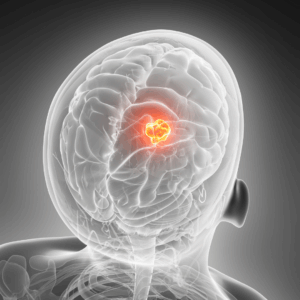
- Posterior Fossa Group A (PFA) ependymoma is the deadliest subtype of central nervous system tumor in young children, but little is known about the mechanisms driving its growth.
- The authors previously identified LDOC1—a tumor suppressor gene—as being silenced in PFA1 tumors, leading them to hypothesize that histone methylation contributes to its loss.
- Using CUT&RUN to map H3K27me3 (a mark of repressed chromatin) in PFA1 tumor cells, they found that LDOC1 sits within a densely compacted chromatin region, helping explain its reduced expression.
- Loss of LDOC1 is needed for tumor growth in PFA1 xenograft models, demonstrating its functional role in disease progression.
- Overall, the study highlights how LDOC1 silencing promotes tumor growth and sheds new light on the epigenetic landscape and immune biology of high-risk pediatric ependymoma.
Temporal control of progenitor competence shapes maturation in GABAergic neuron development in mice
Bright et al., Nature Neuroscience.
Key Takeaways:
- GABAergic projection neurons and interneurons of the telencephalon arise from progenitors in the ganglionic eminence (GE), but how the timing of progenitor competence influences their maturation has remained unclear.
- The authors identified NFIB as a key transcription factor active in late-born progenitors, supported by perturbation studies and initial CUT&RUN analyses.
- Using CUT&RUN on embryonic ganglionic eminence tissue, they mapped NFIB binding in vivo and showed that NFIB associates with regions gaining chromatin accessibility later in development, suggesting a role in chromatin remodeling.
- By integrating CUT&RUN with scRNA-seq, scATAC-seq, and lineage tracing experiments, the team showed that the timing of neurogenesis shapes progenitor competence and influences how their descendants mature.
- Overall, the study reveals how transcriptional programs and chromatin accessibility guide neuronal maturation and diversify GABAergic neuron subtypes during development.
Innate immune memory after brain injury drives inflammatory cardiac dysfunction
Simats et al., Cell.
Key Takeaways:
- Stroke triggers long-lasting reprogramming of the innate immune system, with myeloid cells retaining a pro-inflammatory “memory” well after the initial brain injury.
- These immune changes extend beyond the central nervous system, contributing to chronic cardiac inflammation, fibrosis, and dysfunction in both mice and human stroke patients.
- Using CUT&Tag on bone marrow monocytes and progenitor cells, the authors profiled enhancer-associated marks (H3K27ac, H3K4me1) and an active promoter-associated mark (H3K4me3) and uncovered widespread epigenetic remodeling that supports this trained inflammatory state.
- Motif analysis highlighted key inflammatory transcription factors involved in the rewiring the epigeneic landscape in immune cells. These include STAT1/2, CTCF, and other factors shown to regulate the proliferation and differention of hematopoietic stem and progenitor cells (HSPCs), revealing networks that sustain post-stroke immune memory.
- Overall, the study shows how stroke-induced immune memory can shape systemic inflammatory response and drive long-term cardiac dysfunction, offering a foundation for developing immunotherapies aimed at preventing secondary post-stroke comorbidities.
Sex differences in the developing human cortex intersect with genetic risk of neurodevelopmental disorders
Hennick et al., bioRxiv.
Key Takeaways:
- Neurodevelopmental disorders (NDDs) like autism often show sex-biased prevalence, and the authors set out to understand how early cortical development contributes to these differences.
- Using single-cell transcriptomics and chromatin accessibility profiling on midgestation human cortex from male and female fetuses, the team identified sex-biased molecular signatures underlying two major points of vulnerability linked to NDD penetrance.
- These vulnerabilities include: (1) many NDD-linked genes show higher baseline expression in females, with MEF2C emerging as a key transcriptional regulator of this pattern; and (2) X-linked genes contribute disproportionately to NDD risk, particularly in males.
- CUT&Tag targeting histone marks (H3K4me3, H3K27ac, H3K27me3) and CTCF provided high-resolution maps of promoters, enhancers, and chromatin domains, helping define sex-biased regulatory programs across cell types.
- Sex hormone-related mechanisms played a minimal role, as CUT&Tag for estrogen and androgen receptors revealed little overlap between receptor binding sites and sex-biased gene expression.
- Overall, this preprint reveals how sex-specific regulatory architecture in the developing cortex intersects with NDD genetics, offering insight into why males and females differ in susceptibility.